

Canadian College Admissions
They admit students based on academic qualifications alone. What are they thinking?

Happy Monday!
A housekeeping note: through the end of Ten Things We Get Wrong About College I’ll keep all posts free for everyone, after which about half of TCQ’s posts will be for paid subscribers, and the other half open. Thanks so much to all subscribers, free and paid - I’m grateful. I want TCQ to get out to families who will benefit from it, so please forward any post to your friends!
Before resuming the Ten Things series, I’ll finish the sequence on testing and elite colleges. I started Friday with “Ugh! Perfect Daughter Has to Take the SAT (Really? Why?),” and continued over the weekend with “What Are Elite Colleges Looking For?” and “College is an Identity Good.” The last one looked at the difference between schools that are hard to get into and schools that are hard to graduate from. They aren’t the same thing. Yesterday’s post is worth a look even just to check out Webb Institute, a fantastic, free college in Long Island with a curriculum arguably more rigorous than anything else in American higher ed.
Today we’ll travel 30 miles outside the country (as the Canada Goose flies) to the University of Toronto to see how admissions works there. My choice of Toronto wasn’t random; my parents both went to the U of T, and I’ve visited the campus plenty of times on business trips. The main campus is in the city, closer to the financial district than Columbia but with more of a campus feel than NYU. Canadians might not think of U-Toronto as an “elite university.” I’m not sure that idea even translates, which is part of the point. But global rankings place Toronto higher than most Ivy League schools, so how do they handle admissions?
The passage that follows is from the NYT Opinion cutting room floor.
Do We Have To Do This? Part II
The elite admissions rat race sometimes ends in a foreign country. Jeff Knox, an independent admissions counselor, has occasionally had students shut out of elite American schools who wind up at top Canadian ones like McGill or the University of Toronto. Getting into an elite American school is a complicated and opaque multi-year process, but Canada is different. “I don’t have to help much with the Canadian schools,” Knox says. “Students fill out an application, send a transcript and some test scores. The results are pretty predictable.”
The University of Toronto is just behind Princeton and ahead of the University of Michigan in the U.S. News global rankings, for what it’s worth. In 2021, Toronto hired Ryan Hargraves away from the University of Vermont to head Student Recruitment and Admissions. Ryan’s mandate is to lead a system that recruits and enrolls the best-fit students for a university whose matriculants each year are 70% Canadian and 30% global. I talked to Hargraves at length about the university and his role there - which naturally included a lot that is different in Canada.
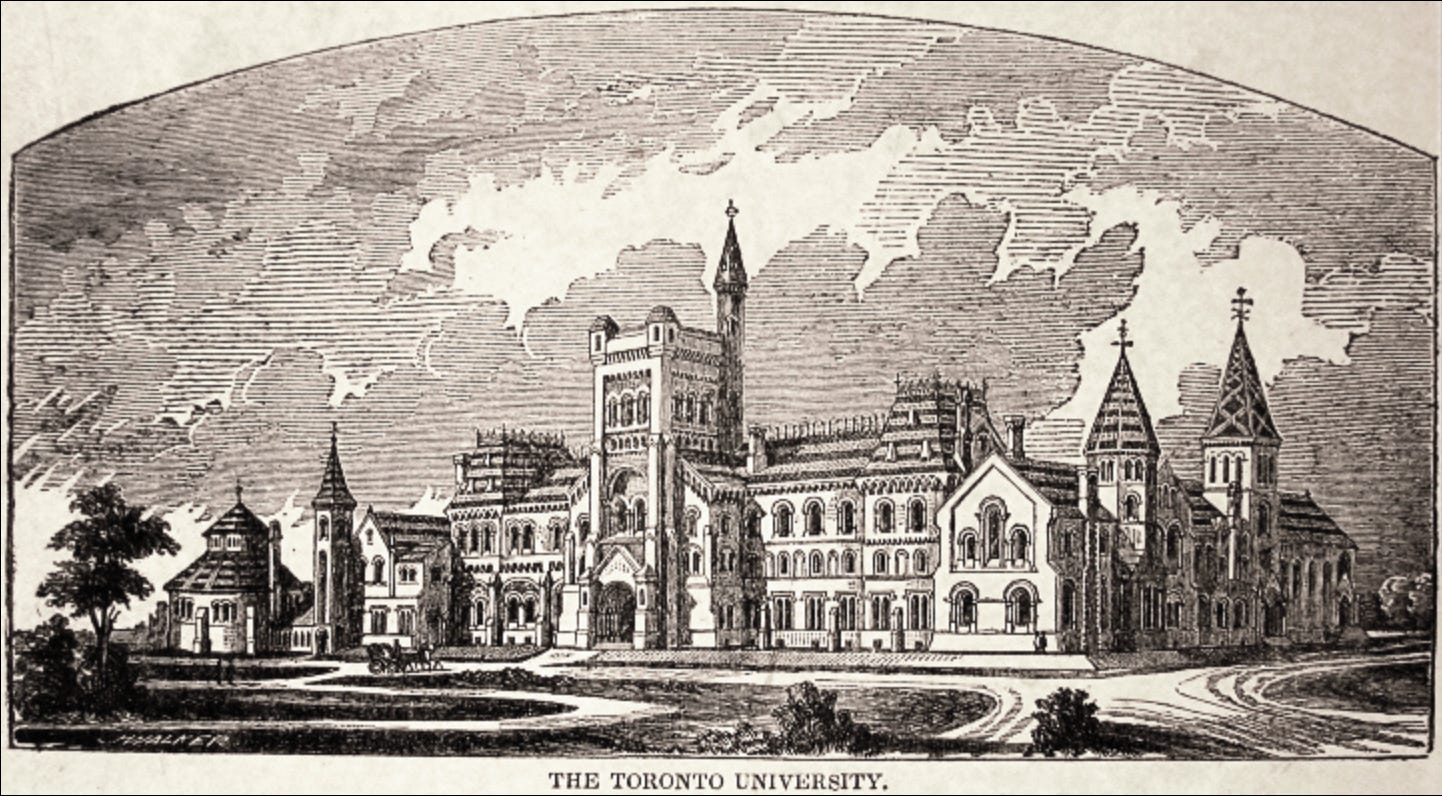
For Canadian students, admissions decisions are based mainly on high school transcripts alone. This is possible because curricula and grading are standardized. For American applicants, SAT or ACT results are used to provide a neutral benchmark, since grades don’t necessarily convey anything reliable. And while certain programs have requirements beyond the high school transcript - theatre applicants must audition, for example - they are obviously relevant to the field of study.
All Canadian schools basically operate this way. Applicants are admitted based on high school transcripts, and in some cases other factors are considered - but not usually. In the U.S., elite-school admissions hinges critically on crafting an applicant persona, since every applicant has straight As and impossibly high test scores. But that’s not true in Canada, and there’s no point in crafting a persona since nobody will see it. The Canadian way of admissions just doesn’t have the capacity to flummox applicants and infuriate parents the way ours does. The University of Toronto rejects a lot of applicants, to be sure, but its reasons are pretty clear.
The Toronto example highlights two things at the root of America’s admissions anxiety. First, most American high school transcripts are a debased currency because of grade inflation - a problem Canada apparently has solved with standard curricula and grading rubrics. But an equally important difference is something the University of Toronto shares with every other university outside the U.S.: students apply to a program, which is to say they have to decide before enrolling what they will major in. This allows that program’s faculty to set admissions criteria specific to the field and decide who has satisfied those criteria.
American schools are unique in that we allow students to decide their field of study — what we call a major — after they are admitted. This partly explains why the American system has holistic admissions, since it’s hard to have objective standards of selection for someone who doesn’t know if they want to major in Anthropology or Architecture - and won’t have to decide for another year or two.
As Hargraves pointed out, the Admissions department doesn’t decide who gets in - that’s the faculty’s prerogative. Admissions is there to recruit applicants, oversee the process, and support the faculty. It used to be a little more like this in American universities too, when admissions standards were more objective. If a known GPA and test score will qualify a student to attend, there’s no need for a dozen staff to pore over essays.
This difference also explains why the rest of the world doesn’t do “holistic admissions” and isn’t likely to start. If the engineering faculty sets the admissions criteria for their program, they aren’t going to admit a linebacker or hockey goalie to round out the entering class. They train engineers.
Yet somehow this does not render intercollegiate sports impossible. The University of Toronto has 21 men’s and 21 women’s varsity athletics teams – like Harvard, plus curling. In fact, the University of Toronto might be where the first college football game was played - anywhere, ever. But Hargraves confirms that today, athletics have little to do with admissions. Toronto’s coaches get the athletes its professors admit; its professors are not stuck with students the coaches would prefer.
By contrast, every Ivy League school’s professors are teaching a large number of students who have been chosen by coaches. Chetty, Deming and Friedman found that 89% of recruited athletes at Ivy-Plus colleges would not have been admitted on academics alone. It is long-received wisdom that Ivy League athletes are well-rounded and tend to be successful later in life. I don’t doubt this, and I further suspect that they may be happier people. But they are “substantially less likely to attend elite graduate schools and work at prestigious firms than their peers.” (See pp. 37-39 in the Chetty et al study here.) That’s not because they are athletes - it’s because 89% of them aren’t academically qualified to be at a super-elite school.
***
That’s the end of the cutting room floor bit. Some thoughts, now a couple years on from having written it.
Before I talked to Ryan Hargraves about Canadian admissions, I hadn’t thought about the fact that the flexible American approach to majors opens the door to our admissions shenanigans. There are other factors, too, like the importance of sports in early 20th century college culture, which set the initial precedent for admitting at least some students with a wink at their academics. (This wasn’t necessary in the earliest years of college football, when coaches would just hire ringers with little or no school affiliation. After that was banned, colleges had to enroll them.)
I’m quite in favor of the flexibility our system allows, and I think forcing applicants to commit to a field of study is a bad idea. How can a 17 year-old know to a certainty that he or she wants to be a nurse? I’ve spent plenty of time in a hospital bed - that’s a heck of a job, and high school isn’t going to get you to that level of career discernment. Arriving at college with options open is the right way to do it.
And that feature of the American system results in a bug: holistic admissions, which gives selective colleges a veneer of deniability even for the undeniable - and indefensible. At many (though not all) elite schools, if your parents’ net worth is in the billions, you’re in. If your mom is in Congress or your dad’s a CEO, you’re in. If you are a celebrity, you’re in. And yes, in all those cases you have probably gained life experiences of some value. But so has the first-generation American from Flushing. But she’s not getting in.
Tomorrow, TCQ returns to Ten Things We Get Wrong About College with #4 - “Well, I guess a sports scholarship is the ticket. (They’re mostly fake.)”
Previous posts:
#9 - College is more expensive than ever! (Tuition has been flat for 15 years.)
#8 - Ugh. We have to fill out the FAFSA. (Maybe. Here’s what to know.)
#6 - There’s a college debt crisis! (No. But there are problems.)
#5 - Ugh! [Perfect Daughter] has to take the SAT. (What for? Let’s get into it.)
To come …
#3 - I bet expensive schools spend a lot on the student experience. (Sometimes, if they feel like it. Here’s how to find out.)
#2 - Ivy League graduates make the big bucks. (Not usually - for pretty obvious reasons.)
#1 - [Handsome Prince] should go to college in [country], where it’s free! (It’s not, which is one of the reasons nobody does this.)